Minimally Invasive Cardiac Surgery · Hangzhou, China

Operating on
the heart, without
leaving a mark.

Dr. Yong Cui pioneered no-visible-scar, trans-axillary cardiac surgery in China — and originated MESM, Minimally Invasive Electro-Septal Myectomy.

Director, Department of Cardiovascular Surgery — Heart Center, Zhejiang Provincial People's Hospital (Affiliated People's Hospital, Hangzhou Medical College).

4,000+
No-scar MICS cases since 2018
1,000+
MESM procedures
400+
Trans-axillary multi-valve operations
200+
Trans-axillary ascending-aorta cases
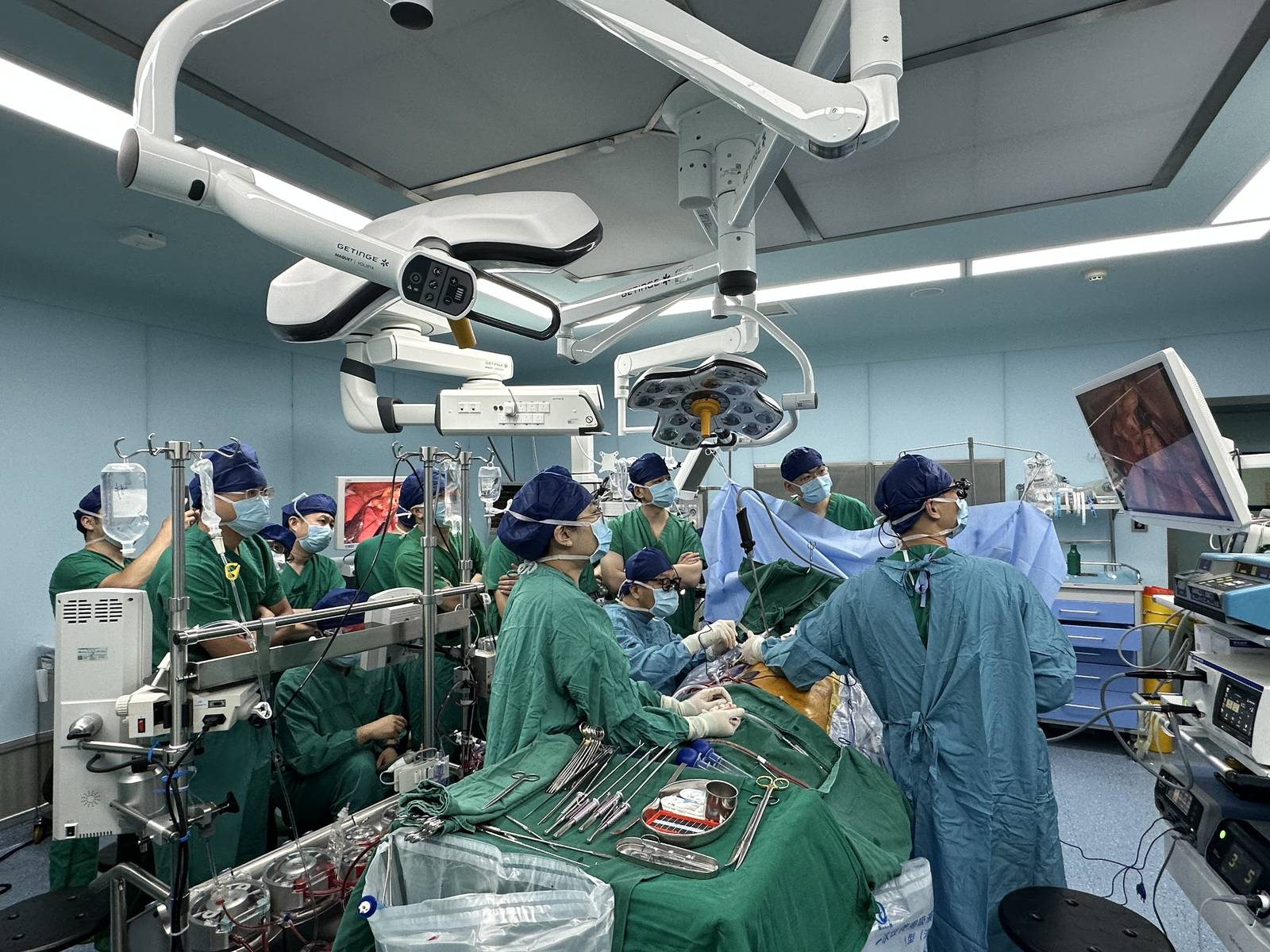
Dr. Cui and team in the operating room
The Philosophy

Every heart operation has the same purpose — to make the heart whole again. When the anatomy allows, that same repair can be done through a single hidden incision beneath the arm: the sternum is spared, there is no visible scar, and recovery often begins sooner.
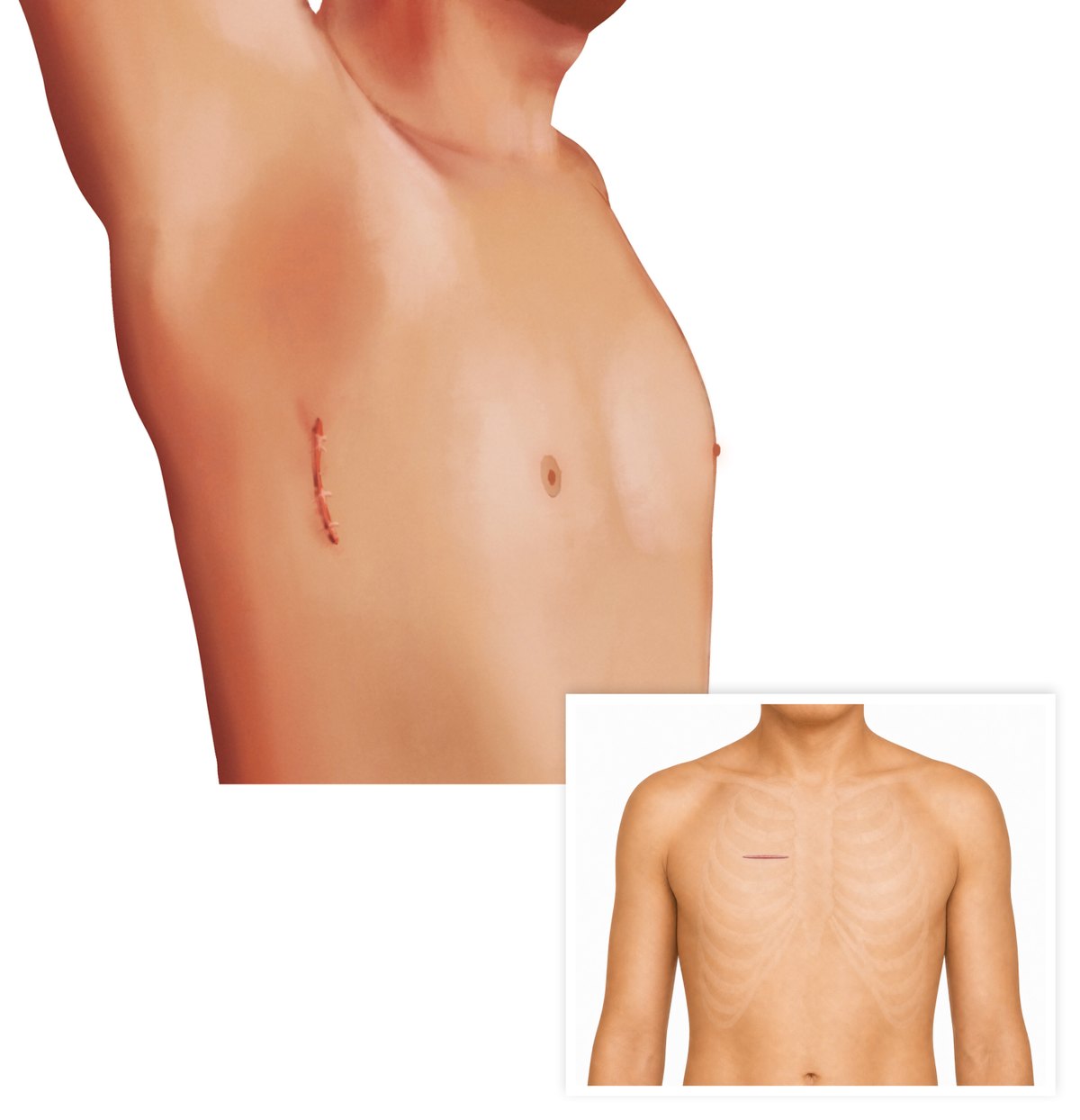
Healed trans-axillary incision, hidden beneath the arm
Trans-axillary · hidden beneath the arm
Small anterior right-thoracotomy incision beside the sternum
Anterior right thoracotomy · a short incision beside the sternum, no bone divided
The Result

The right access
for each repair.

Most operations are done through a single 5 cm trans-axillary incision between the anterior and mid-axillary line — with the arm at rest, nothing shows on the front of the chest. It is the only incision: no separate camera ports, no drainage ports, no left-atrial retractor ports. For aortic-root and selected valve work, a short anterior right-thoracotomy incision beside the sternum is used instead. In every case the sternum stays intact, so the risk of sternal wound and mediastinal infection is eliminated entirely.

01 — Signature Procedures

The full landscape — almost all of it through a single hidden incision.

Most operations are performed via the trans-axillary no-scar approach; selected aortic-root and bicuspid-valve work is done through a right parasternal minimally invasive access.

/ 01
Trans-axillary · Foundation

Trans-axillary No-Scar MICS

Enquire
Minimally invasive cardiac surgery (MICS) through a single 5 cm incision between the anterior and mid-axillary line — through serratus anterior and intercostal muscle only, no sternotomy, no visible scar. It is the only opening — no separate camera ports, no drainage ports, no left-atrial retractor port. Developed and continually extended since 2018 into one of the most comprehensive no-scar cardiac programmes, and paired with ultra-fast-track anaesthesia: selected patients are extubated on the operating table. The foundation for 4,000+ cases.
/ 02
Flagship technique

MESM — Minimally Invasive Electro-Septal Myectomy

Dedicated resource: mesmsurgery.com
Dr. Cui's original technique for hypertrophic obstructive cardiomyopathy: septal myectomy by electro-excision (electrocautery) rather than sharp resection, through a 5 cm trans-axillary incision — no sternotomy. The straight-line axis from axilla to ventricle gives the controlled, layer-by-layer reach needed even for mid-ventricular obstruction (LVMCO). Over 1,000 cases — the largest single-centre series. Full detail at mesmsurgery.com.
/ 03
Trans-axillary · 400+

Trans-axillary Multi-Valve Surgery

Enquire
Mitral, tricuspid and aortic valve surgery — repair whenever the valve can be preserved, replacement only when it cannot — including double- and triple-valve operations and aortic-root enlargement for a small annulus. Includes China's first reported trans-axillary aortic valve replacement and first trans-axillary double-valve replacement.
/ 04
Trans-axillary · 200+

Trans-axillary Ascending-Aorta Replacement

Enquire
Ascending aortic aneurysm repair and combined valve-and-aorta (Wheat) operations through the axilla — a route reported in Innovations (2024).
/ 05
Trans-axillary · Innovative

Trans-axillary Commando Procedure

Enquire
Reconstruction of the aorto-mitral curtain with double-valve replacement — among the most complex open operations in cardiac surgery — carried into minimal access. An innovative new technique, established and advancing rapidly.
/ 06
Trans-axillary · Innovative

Trans-axillary Adult Congenital Repair

Enquire
Beyond valve and aortic work, the trans-axillary approach reaches the full range of adult congenital repair — closure of atrial and ventricular septal defects (ASD/VSD), atrioventricular septal defect (AV canal) repair, and more. Featured here is the cone reconstruction for Ebstein's anomaly, the most technically demanding of them: it rebuilds the tricuspid valve from the patient's own leaflet tissue, and carrying it through a single hidden incision marks the upper limit of what minimally invasive access can reach.
/ 07
Right parasternal · Innovative

Aortic & Bicuspid Valve Repair

Enquire
Repair-first aortic valve surgery, including bicuspid aortic valve (BAV) repair, via a right parasternal minimally invasive incision — a maturing technique that is growing quickly.
/ 08
Right parasternal · Innovative

David Procedure & Bentall

Enquire
Valve-sparing aortic root replacement (David procedure) and the Bentall operation through a right parasternal, anterior right-thoracotomy minimally invasive access. Dr. Cui's volume of aortic root surgery through this approach is among the largest reported worldwide.
/ 09
Minimally invasive · Innovative

LVAD Implantation

Enquire
Left ventricular assist device implantation for advanced heart failure through minimal access — including China's first reported minimally invasive, beating-heart LVAD implantation (2022): two small incisions, no rib division, extubation on day one.
Innovation

A heart pump,
without opening the chest.

For advanced heart failure, a left ventricular assist device can be implanted through two small incisions — without dividing the sternum or the ribs. In 2022 Dr. Cui performed China's first reported minimally invasive, beating-heart LVAD implantation: the heart keeps beating throughout, and most patients are extubated on the first day.
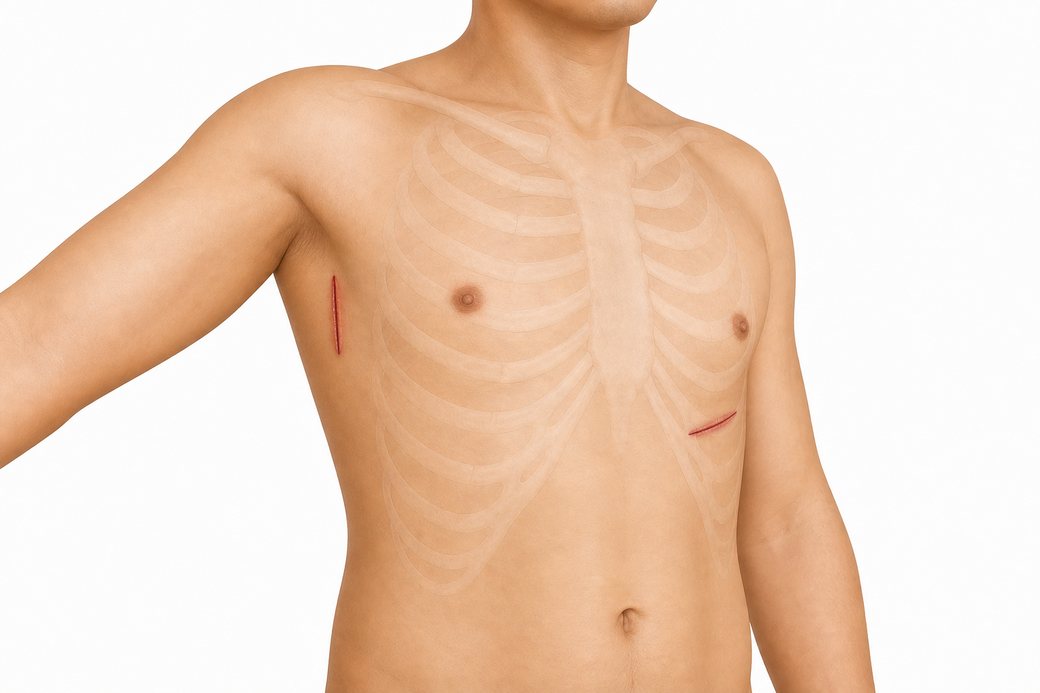
Two small incisions for minimally invasive LVAD implantation, sternum intact
Two small incisions · sternum and ribs intact
02 — The Approach

Less trauma is the argument. The hidden scar is only what you see.

The cosmetic result is what patients notice first — but it is not the point. Preserving the sternum and minimising surgical trauma means less pain, less bleeding, fewer wound complications and an earlier return to ordinary life. Minimally invasive should mean safer and faster, not merely smaller.

That principle is made concrete by an ultra-fast-track anaesthesia programme developed with the anaesthesia team: suitable patients are extubated on the operating table and out of bed early.

In obstructive cardiomyopathy, relief of obstruction is planned around the three determinants of LVOTO — septal hypertrophy, intraventricular structural abnormality, and mitral-valve geometry — rather than wall thickness alone.
P.01
Hidden access
One 5 cm trans-axillary incision — and only one: no camera, drainage or retractor ports, no median sternotomy, no visible chest scar.
P.02
Safer & faster
Ultra-fast-track anaesthesia and on-table extubation, so recovery starts sooner.
P.03
Three determinants of LVOTO
Outflow obstruction read as septum, intraventricular structure and mitral geometry together.
P.04
Open to scrutiny
Results published and presented internationally, not kept behind closed doors.
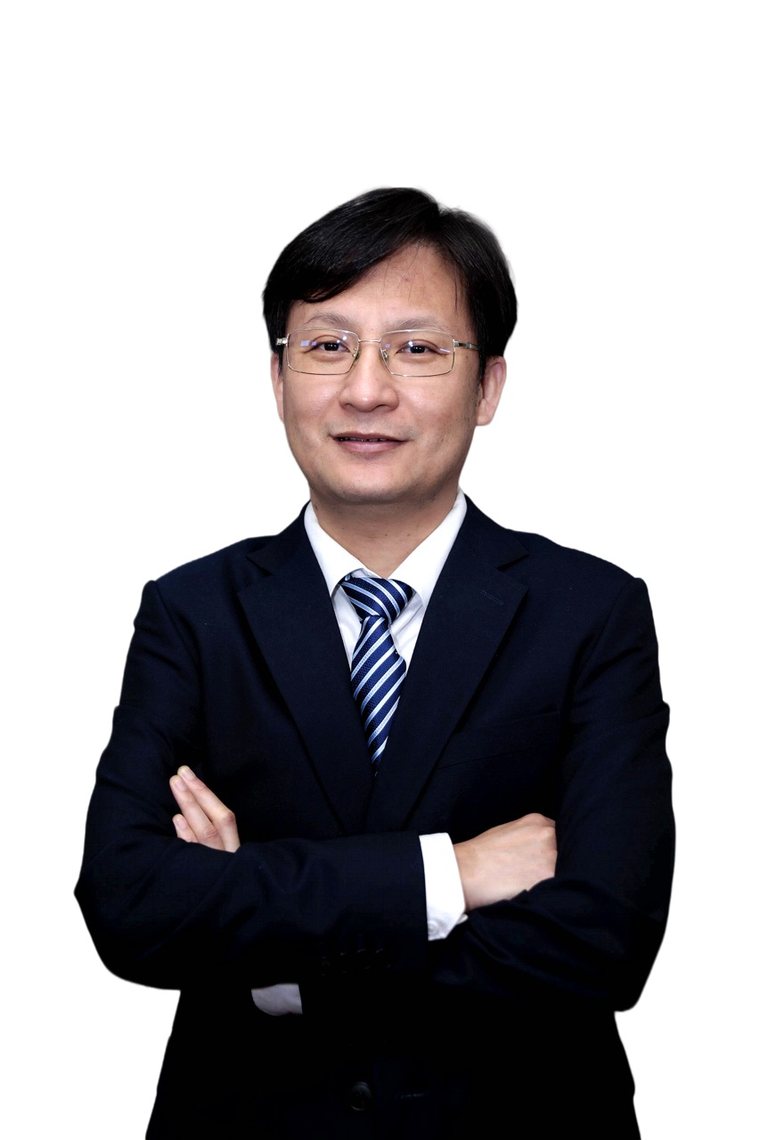
Dr. Yong Cui, MD, PhD
03 — About & Academic

Trained internationally.
Publishing for the field.

Yong Cui, MD, PhD, is Director of the Department of Cardiovascular Surgery at Zhejiang Provincial People's Hospital. A Clinical Fellow at the University of Alberta (2010–2013), he returned to build one of China's most comprehensive no-scar minimally invasive cardiac programmes — and to develop MESM, his original technique for obstructive cardiomyopathy.

Appointments

Director of Cardiovascular Surgery

Director of the Department of Cardiovascular Surgery, Zhejiang Provincial People's Hospital. Clinical Fellow in cardiac surgery, University of Alberta (Mazankowski Heart Institute), Canada, 2010–2013.

  • Standing Committee Member, Minimally Invasive Cardiovascular Surgery Committee — National Center for Cardiovascular Diseases
  • Standing Committee Member, Mechanical Circulatory Support Branch — Chinese Society of Biomedical Engineering
  • Vice Chairman, Thoracic Surgery Branch, Zhejiang Medical Association
  • Vice President, Cardiovascular Surgery Branch, Zhejiang Medical Doctor Association
Societies

International memberships

  • The Society of Thoracic Surgeons (STS)
  • International Society for Minimally Invasive Cardiothoracic Surgery (ISMICS)
  • Canadian Society of Cardiac Surgeons (CSCS)
  • Asian Society for Cardiac Valve Disease (China Chapter)
Research

20+ peer-reviewed publications

An active SCI record in minimally invasive technique and outflow-tract surgery — see selected publications below.

Invited Lectures

On the international stage

  • ISMICS Annual Meeting (2024) — trans-axillary MICS, the China experience
  • AATS Annual Meeting (2026) — MESM for mid-cavity obstruction (LVMCO)
  • Bologna Heart Surgery Symposium (June 2026) — minimally invasive David & Bentall
04 — Selected Publications

The work, in the literature.

  1. Minimally Invasive Electro Septal Myectomy for Hypertrophic Obstructive Cardiomyopathy Through a Right Infra-Axillary Incision. Wang S, Dong Z, … Cui Y. The Annals of Thoracic Surgery. 2025.  doi:10.1016/j.athoracsur.2025.09.028 ↗
  2. An innovative minimally invasive approach for hypertrophic obstructive cardiomyopathy: transaortic septal myectomy via right infra-axillary incision. Dong Z, Wang S, … Cui Y. JTCVS Techniques. 2024;28:50–58.  doi:10.1016/j.xjtc.2024.09.006 ↗
  3. Minimally invasive right infra-axillary thoracotomy for transaortic septal myectomy. Wang S, … Cui Y. Journal of Cardiac Surgery. 2022;37(7):2197–2201.  doi:10.1111/jocs.16546 ↗
  4. Minimally invasive video-assisted surgery for concomitant ascending aorta and aortic valve replacement via right infra-axillary thoracotomy. Cui Y, et al. Innovations: Technology and Techniques in Cardiothoracic and Vascular Surgery. 2024;19(6):626–632.  doi:10.1177/15569845241285872 ↗
  5. Perioperative echocardiography in minimally invasive surgery for hypertrophic obstructive cardiomyopathy. Wang Z, … Cui Y. Journal of Clinical Ultrasound. 2024.  doi:10.1002/jcu.23732 ↗

Selected from 20+ peer-reviewed publications. Full bibliography available on request.

05 — Operative Videos

Watch the operations.

Operative footage and conference lectures. Surgical videos will be embedded below; talks are available now on the channel.
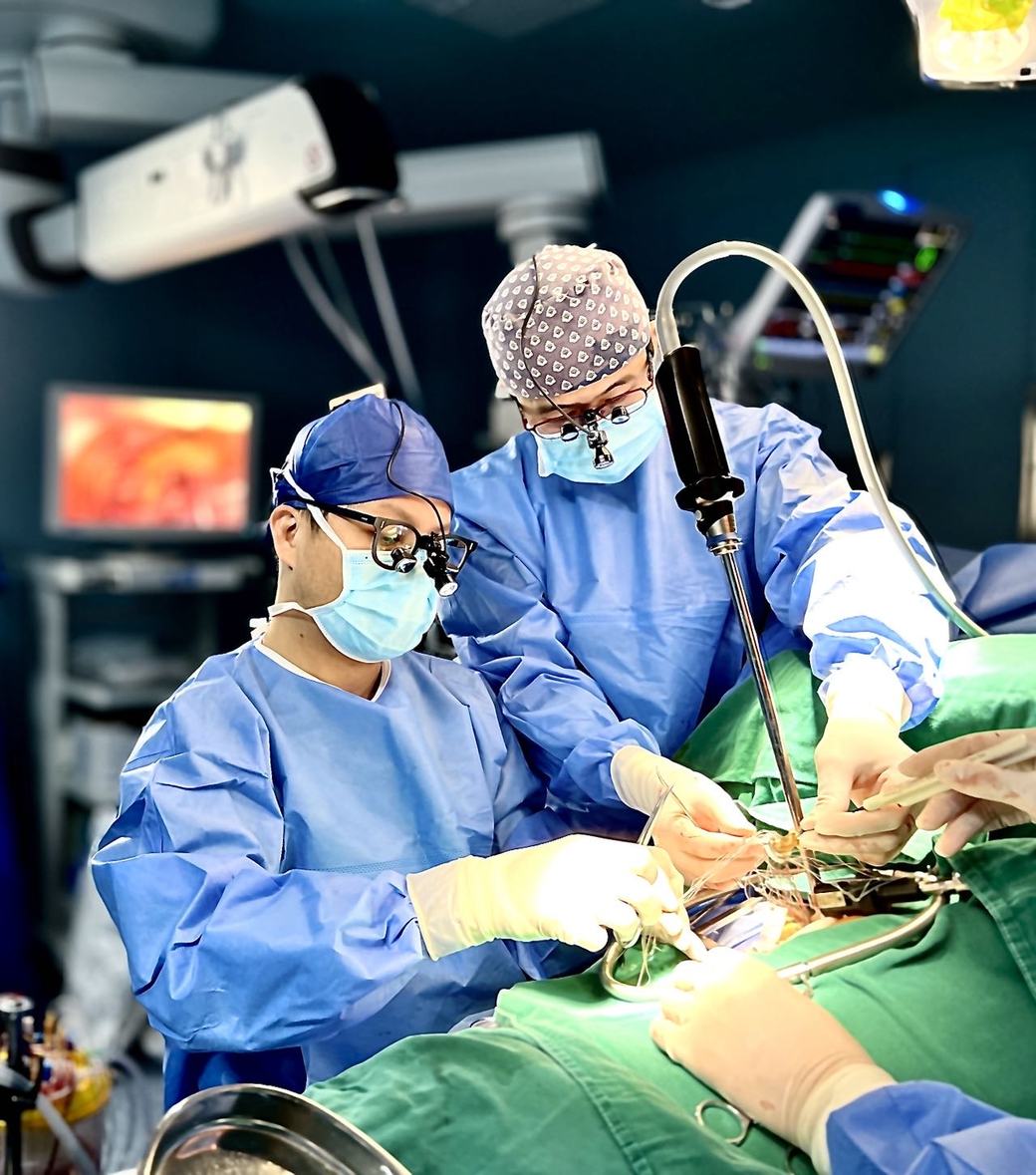
Dr. Cui operating via the trans-axillary approach
Operative videos & conference lectures
Trans-axillary MICS · MESM · valve & aortic work
YouTube · @drstraitcui
06 — Contact

For patients and referring physicians.

Enquiries are welcome from patients considering minimally invasive cardiac surgery and from physicians seeking referral, second opinion, or technique collaboration.

Institution
Heart Center, Zhejiang Provincial
People's Hospital — Hangzhou
Operative videos
Specialist resource